
Jyväskylä City Theatre is one of the important works created by architect Alvar Aalto, and a part of the internationally renowned history of Finnish architecture. The original light fixtures of the building are an important part of the whole. The light fixtures of the theatre have been modernised and restored by Greon Oy to meet today’s lighting standards, preserving their original look and architectonic importance.
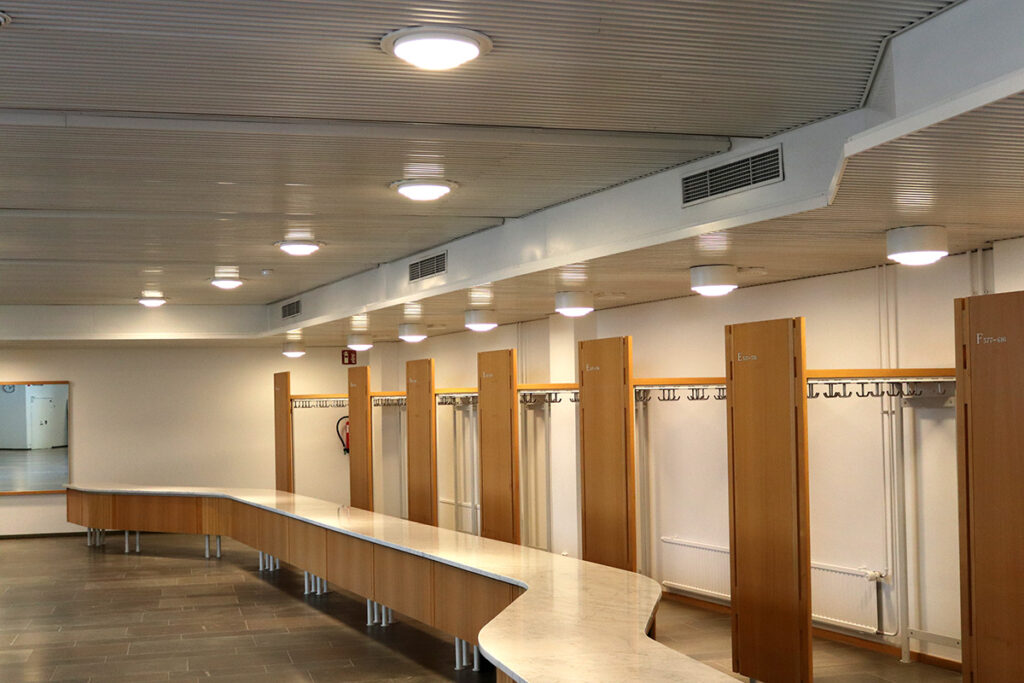
In the Jyväskylä City Theatre building designed by Alvar Aalto lighting is not a mere separate detail, but instead, light fixtures are a part of the overall architecture of the building and the atmosphere of the premises. When the light fixtures of a historically important building are being modernised, the point of departure is different from a usual lighting renovation project. The modern technology must serve the architecture, instead of changing it. In this case the aim was to preserve the recognisable look of the light fixtures, and the image suitable for the original architecture, whereas the technical characteristics were updated to meet today’s requirements.
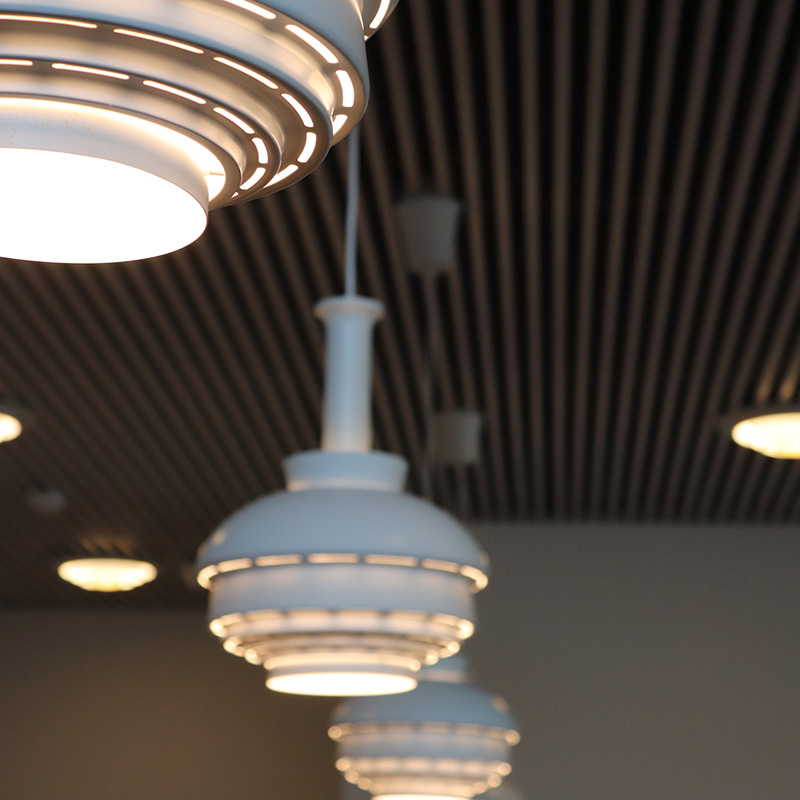
Modern technology showing respect towards the original image
As far modernisation is concerned, an essential starting point is the utilization of the existing light fixtures as the basis for new technology. The focus will be directed on which elements of the original will be preserved, and how, as well as how the new technology will be integrated into the old one.
Whereas in case of luminaire to be restored, technology will be modernised in a different way: an old electric component will often be replaced with a similar new one. The light source is often desired to be easy to replace, and imitate the original. The surface can be renovated, or it may be only cleaned carefully, which means that the modernization will be carried out neither to excessive nor insufficient extent.
The difference between modernization and restoration lies in the method of implementation and renovation philosophy. The desired outcome and the luminaire structure will determine which method of implementation will be selected.
In case of such a building, details are relevant. The design language and light output of a light fixture on the surfaces of the light fixture and the room form a whole that will have to remain identifiable also with the changing of technology.
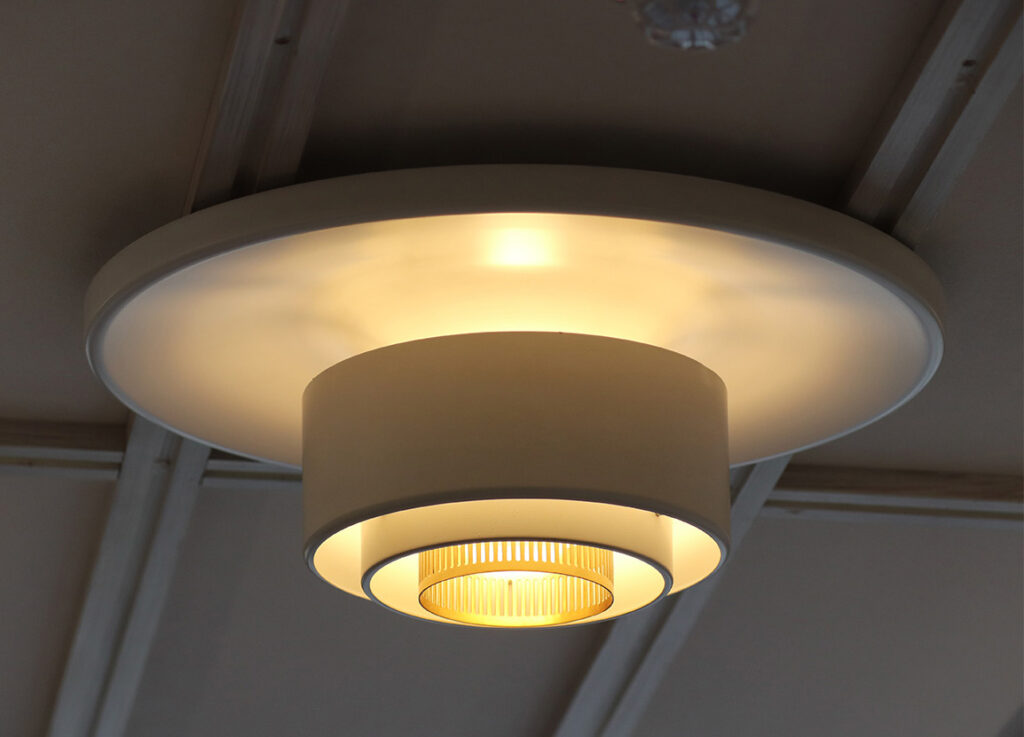
Almost 700 light fixtures were renewed with the restoration and modernization of the lighting
At Jyväskylä City Theatre the modernization and restoration of light fixtures required a great number of versatile measures. Each phase was appropriate and led towards the desired outcome.
At the early stages of the project, it was important to develop a common vision on what is desired and under what terms. This was executed at a joint meeting of various parties involved in the project at Greon’s factory.
The duration of the project was 18 months. There were the total of 700 light fixtures and 29 positions with 20 different types of light fixtures. All the light fixtures were collected and stored at Greon’s premises for the duration of the project, and each light fixture model was handled at its own turn, in accordance with the project schedule.
The schedule and distribution of information was taken care of by means of a joint project databank.
‘Particular attention had to be paid to the labelling, logistics and storage of products, as each and every light fixture had to remain intact during two separate transports. No extra unloading measures were allowed to take place during the transport. Light fixtures had to find their places seamlessly bot at work site and at the factory, and they had to be exactly in the right order from the viewpoint of the production. When a lorry full of light fixtures arrived, we had to act systematically’, says Jarmo Lohilahti of Greon Oy.
A preliminary report was prepared on each light fixture type, where the current state of light fixtures was assessed, and a plan for actions was drawn up. The assessment of current state involves the necessary light distribution measurements and electrical and mechanical checks to be carried out for the light fixtures, and preparation of documentation to decide upon further measures, and for their approval.
This means that further actions will be decided based on the preliminary report documentation. After a decision on measures has been made and approved, test installation light fixtures will be manufactured, and an inspection will be carried out – in this case, too. A particular issue to be dealt with during the test installation inspection may be surface treatment, light source, desired luminous flux or colour temperature, method of technical implementation or the way in which light comes out of a light fixture and what a light fixture looks like (i.e. is the desired outward appearance achieved).
After test installations and inspections, necessary changes will be made, and then we’ll proceed to 3D modelling, possible new proto types and production series.
The 20 different light fixture types require a wide range of diversified measures
With regard to the light fixtures to be modernized, the modernization units are like light fixtures within a light fixture. Completely unique modernization units were designed and produced for the light fixtures to be modernized. This meant new planning made on the 3D model of an original, and new components and technology were created based on this. Modernization units settled in their places with precision and ease. The very same requirements are set for the planning and manufacturing of modernization projects that have been set for new light fixtures.
All light fixtures were dismantled and cleaned using cleaning agents specially approved for the project, depending on the cleaning level and materials of the light fixture concerned. New electrical components, such as wires, lamp holders, connectors and power supplies were replaced to all light fixtures.
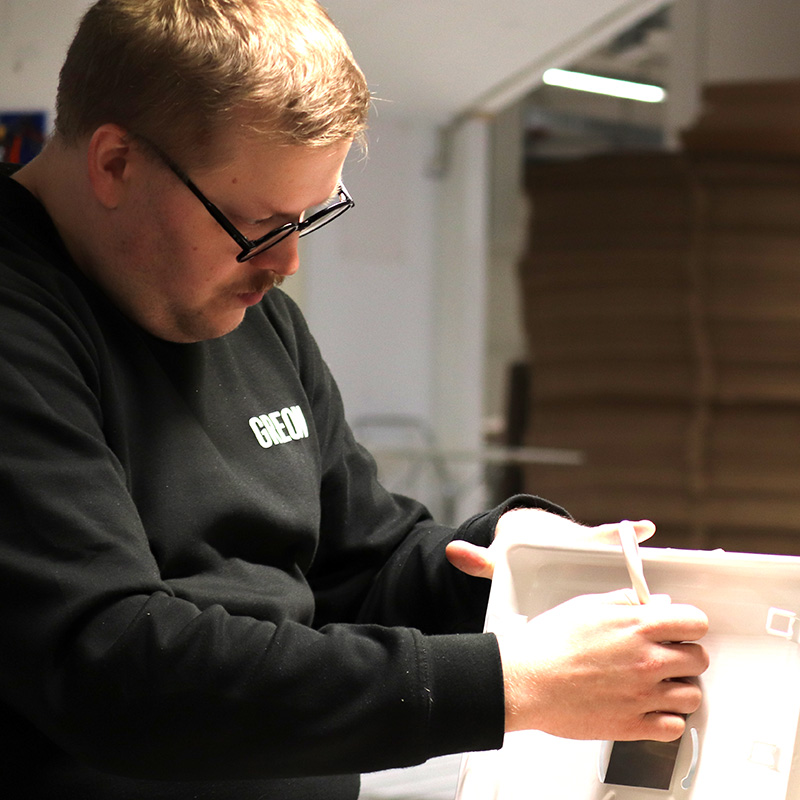
Mechanical defects found in light fixtures were fixed using various methods. Typical defects were deformed parts and dents, that were corrected mainly with hand tools. There were broken bolts and screws in brass light fixtures. Their removal required among other things the production of mounting brackets for the light fixture, in order to be able to work broken bolts in a milling machine off. This was a task demanding particular precision, to preserve valuable light fixtures without scratches.
Some light fixtures required new surface treatment due to for example too extensive damages, tobacco-stained yellow colour or rust. The old, cleaned paint was subjected to colour analysis, in order to find a new paint to match the old paint surface, with regard to both tone and gloss level. Old paint was removed with extreme care: without causing distortion due to warmth, excessive change in the roughness of the base or other damage to the part to be painted. The part to be painted was painted to be similar to the original part. The aim, however, was not to fix all scratches and wear by repainting, as we wished to show patina of age, too.
All light fixtures, both those to be restored and those to be modernized, were executed to be controlled. The types of dimming controls used are DALI and DMX. Controls for light fixtures were placed either inside or outside of them, depending on the space available and the desired method of implementation.
Co-operation where details matter
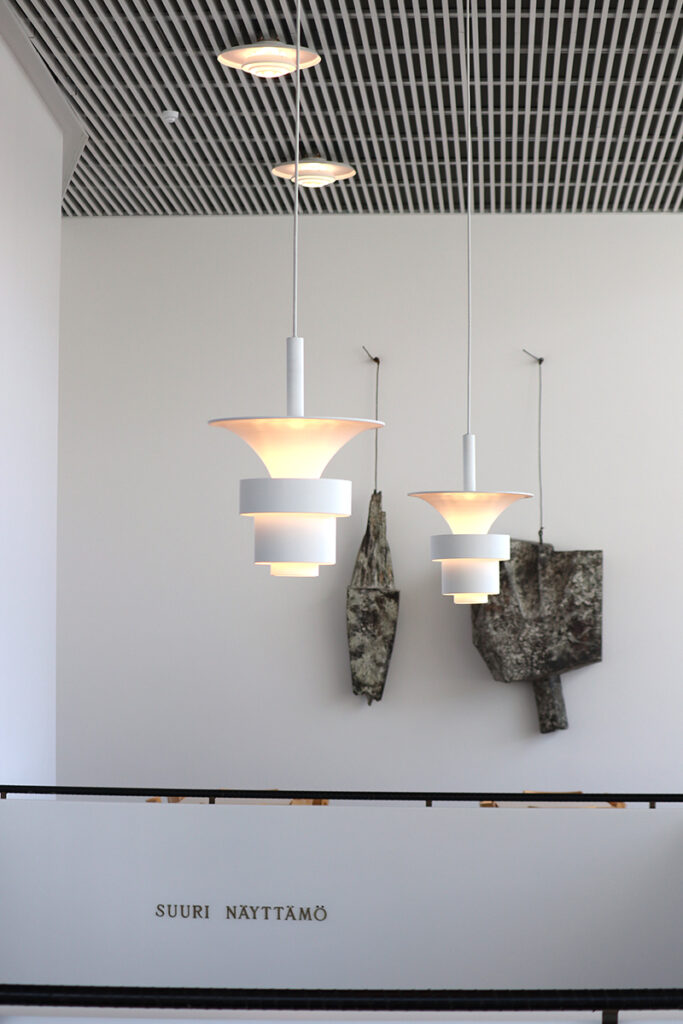
The modernization of light fixtures at a historically important building requires careful planning and understanding of the special characteristics of the building. At Jyväskylä City Theatre the aim was to find a solution preserving characteristics of original design, while making use of the technical possibilities of the lighting according to modern needs.
Co-operation was a prerequisite for the project, with a long duration and involving several different light fixture models and methods of execution. Regular interaction and common, shared database for example were in a key role. ‘Everything has gone smoothly, and we are very pleased’, said Jori Pulkkinen of ESP Oy.
As a result, the original light fixtures of the theatre continue their existence as a part of the whole designed by Aalto – today only with updated technology.
Further information about the project:
Greon Oy
Jarmo Lohilahti
050 435 1067